
Businesses today are operating in an environment where efficiency, speed, and scalability determine success. For small and mid-sized business owners, especially, growth often creates a hidden challenge: the founder becomes the operational bottleneck.
Handling scheduling, inbox management, customer communication, bookkeeping follow-ups, CRM updates, reporting, and vendor coordination may feel manageable.
But as the business grows, these recurring responsibilities begin to consume the very time owners need sales, leadership, client relationships, and strategic decision-making.
That is why more businesses are turning to virtual assistant services as a structured way to increase capacity without adding the cost and complexity of full in-house hiring.
This demand is reflected clearly in market research. The virtual assistant market is expected to grow to $23.97 billion by 2030 at a CAGR of 24.1%, underscoring the strong adoption of remote support models to improve efficiency and scalability.
VIRTUAL ASSISTANT INDUSTRY
Why Businesses Are Hiring More VAs
$23.97B
Projected Global VA Market Size By 2030
24.1%
Compound Annual Growth Rate (CAGR)
SMBs
Driving Adoption Through Operational Efficiency
24%
Small Businesses Outsource Primarily For Efficiency Gains
However, hiring a VA without the right structure can easily create the opposite result. Instead of saving time, small business owners often end up managing confusion, rework, communication gaps, and unclear expectations.
This is why many companies now prefer working with a virtual assistant company that provides structured hiring, role-fit guidance, and pre-vetted talent rather than relying purely on freelance marketplaces.
Before hiring, there are several critical factors every small business owner must evaluate to ensure the decision becomes a growth lever rather than another management burden.
Let’s look at the most important factor to consider before hiring a virtual assistant.
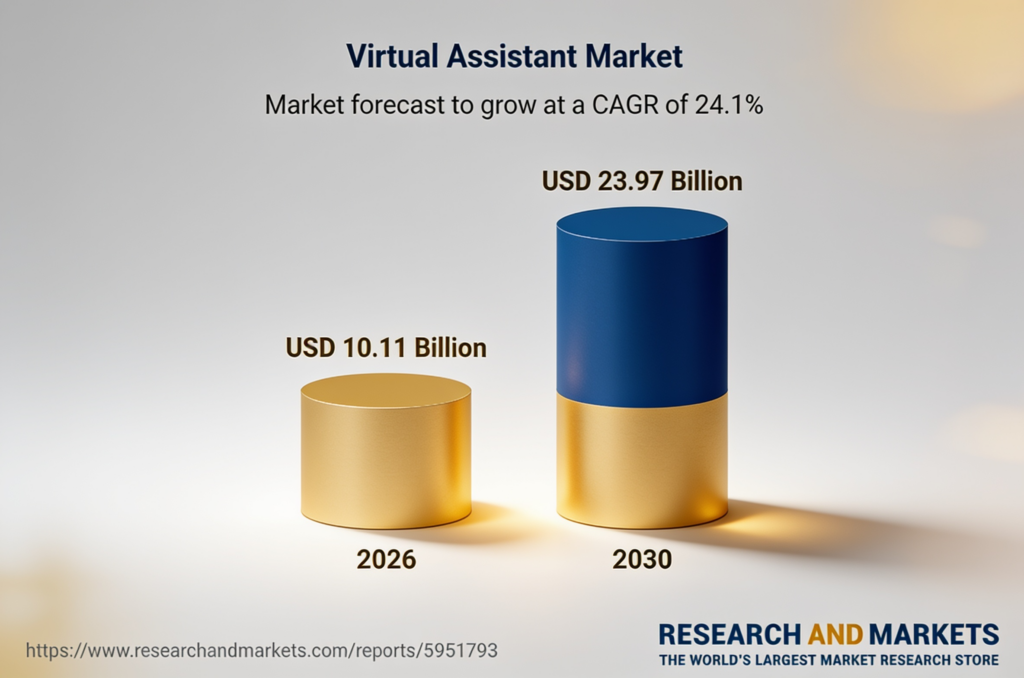
Image Source: Research and Markets
Clarity: Define the Role Before You Hire
The first and most important factor is clarity.
For many founders, “hire a VA” is not actually a strategy. It is a reaction to overload.
The problem is that overwhelming often leads owners to hire before they define what they truly need.
Before engaging any virtual assistant providers, ask:
- What exactly do I want off my plate?
- What does success look like in the first 30 days?
- Which tasks are repeatable?
- Which tasks require judgment?
- What decisions still need my approval?
Take inbox management as an example.
Many owners say, “I need someone to manage my inbox.” But that can mean very different things operationally. But what does that mean?
- Reply to every email?
- Prioritize only clients?
- Escalate certain messages?
Without these boundaries, your assistant is forced to guess.
And when a VA is guessing, two things happen: they either overstep or hesitate. Both outcomes slow the business.
A strong virtual assistant services company helps bring clarity before hiring starts. Instead of just sending candidates, the focus is on helping small business owners define what good execution actually looks like.
A practical way to create clarity before hiring:
- List 5–7 tasks you want to delegate
- Define what “done well” looks like for each
- Record 2–3 short Loom videos showing your process
- Write down what decisions they can make independently
- Define escalation boundaries clearly
Before Hiring A VA, Ask Yourself
What exactly do I want off my plate?
What does success look like in 30 days?
Which tasks are repeatable?
Which decisions require my approval?
Do I have time to train someone properly?
For SMB owners, this step alone prevents most early delegation failures.
Your Time: A VA Is Not Plug-and-Play
This is uncomfortable but true: hiring a virtual assistant does not immediately save time.
In the beginning, it costs time.
And this is where most founders get it wrong.
They hire when they are already overwhelmed, hoping the assistant will instantly remove pressure. But the first 30 days are not about relief. They are about investment.
A virtual assistant is not software. They are learning your workflow logic, communication style, decision patterns, and quality expectations.
That means the first month requires active involvement from the founder.
More importantly, this stage is not just about task transfer. It is about judgment transfer.
Your VA needs to understand how you prioritize, what matters most to customers, how fast responses should happen, what “urgent” really means, and how you make decisions under pressure.
Pause and ask yourself honestly:
- Do you actually have time to guide someone for the first 30 days?
- Can you spend 30–60 minutes a day reviewing work?
- Are you willing to explain the why, not just the what?
- Are you tired of making small decisions all day but still unwilling to let go?
This reflection matters because decision fatigue is often the real signal that it is time to delegate.
If your day is full of tiny approvals, follow-ups, inbox decisions, scheduling changes, and repetitive customer responses, the issue is not workload alone. The issue is that your mental bandwidth is being consumed by low-leverage decisions.
This is where many founders struggle. The hard part is not finding help. The hard part is making the time investment required to transfer your thinking.
Walk them through your day. Share your thinking out loud. Correct small mistakes early. Explain why one customer gets escalated while another gets a template response.
You are not just delegating tasks.
You are transferring judgment.
For small businesses, this is the real differentiator between a VA who remains dependent and one who becomes a true extension of the business.
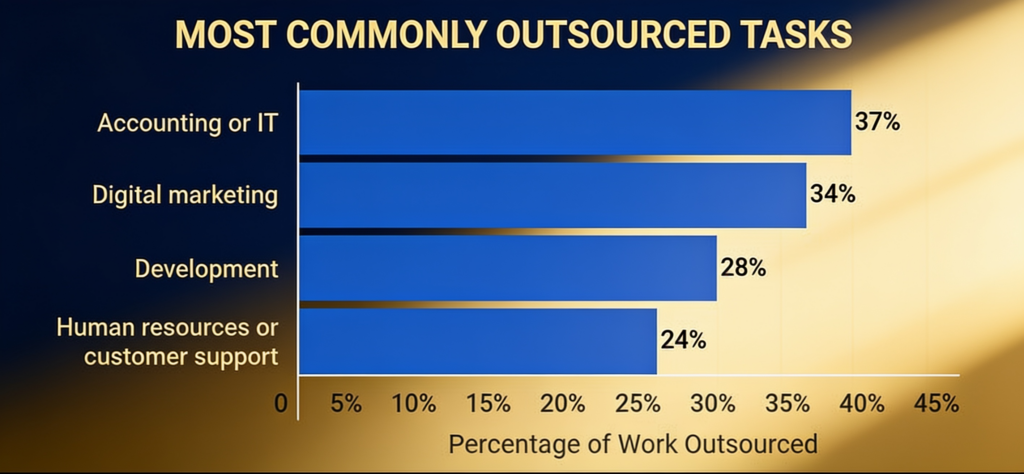
Image Source:Zippia
Understanding Which Tasks Are Best Delegated to Virtual Assistants
Not every business activity should be outsourced immediately.
Virtual assistants create the fastest ROI when they own structured, repeatable, process-driven work.
For small business owners, the highest-value delegation categories usually include:
Administrative Support
Calendar scheduling, inbox triage, meeting coordination, travel planning, document formatting, and file organization are ideal starting points. These tasks are essential but should not consume founder bandwidth.
Customer Support Operations
Responding to routine inquiries, supporting ticket triage, sending onboarding reminders, following up on orders, and confirming appointments help improve customer responsiveness without requiring leadership-level involvement.
Marketing and Sales Assistance
CRM updates, lead research, proposal follow-ups, list building, social scheduling, and pipeline cleanup directly support growth while freeing the owner from repetitive work.
Operational Coordination
Vendor communication, reporting support, invoice reminders, data entry, and internal documentation are excellent systems-based tasks for VAs.
Studies show that 24% of small businesses outsource to improve efficiency, which aligns strongly with this use case.
37% of small businesses most commonly outsource accounting, finance, and administrative support functions
Choosing Between Freelance Virtual Assistants and a Virtual Assistant Company
Option 1: Freelance Platforms
Hiring through freelance marketplaces may appear faster.
You post a job, receive applications, compare profiles, and hire based on budget.
But the hidden cost is decision fatigue.
The founder still owns:
- profile screening
- interviews
- reliability checks
- skill validation
- onboarding
- performance management
- replacement risk
Even when the hourly rate looks lower, the management overhead remains high.
Option 2: A Structured Virtual Assistant Company
A professional virtual assistant company completely changes the experience.
Instead of reviewing 30 profiles, you review 2–3 strong matches.
The difference is that the staffing partner already handles:
- talent sourcing
- structured screening
- communication evaluation
- role-fit matching
- working-hours alignment
- replacement protection
This is where Simpalm Staffing’s Sherpa-style guidance model becomes a differentiator. The goal is not cheap, fast talent. The goal is safer delegation, stronger role-fit, and less founder friction.
Evaluating Skills and Tools That Modern Virtual Assistants Should Have
Today’s VAs operate inside business systems, not outside them.
That means technical fluency matters.
Before hiring, businesses should assess whether candidates are already comfortable with:
- Slack
- Trello
- Asana
- ClickUp
- HubSpot
- Google Workspace
- Notion
- Calendly
- Zoom
This is especially important for small businesses because faster tool adoption means faster ROI.
Instead of spending weeks teaching platforms, the owner can focus on workflow ownership and business context.
Geographic Location and Time Zone Compatibility
For U.S.-based small business owners, time zone overlap is not just a convenience. It is an operational advantage.
This is why LATAM has become one of the most strategic talent regions for virtual assistant services.
LATAM-based VAs offer:
- real-time U.S. working hour overlap
- faster decision loops
- smoother meeting coordination
- better customer communication
- bilingual English-Spanish support
- stronger cultural alignment
Compared with overnight offshore delays, same-day execution improves speed across customer support, project coordination, and sales workflows.
Setting Clear Communication Systems Before Hiring
Even highly capable assistants struggle inside vague communication environments.
Before day one, small business owners should define:
- daily reporting expectations
- task management workflows
- response-time SLAs
- weekly review meetings
- escalation paths
- dashboard visibility
Remote work research shows that communication challenges remain a top issue for remote teams.
For SMBs, communication systems reduce micromanagement and create accountability.
A strong virtual assistant company should help establish these systems early so the founder is not forced into constant follow-up.
FOUNDER’S DECISION FRAMEWORK
5 Factors That Determine VA Success
Role Clarity
Training Time
Task Selection
Hiring Model
Communication System
Understanding the True Cost of Hiring a Virtual Assistant
Many businesses incorrectly evaluate a VA only by hourly cost.
The real cost includes:
- Recruitment time
- Onboarding effort
- Software licenses
- Founder oversight
- Process documentation
- Communication systems
- Replacement risk
A low-cost assistant who creates rework is expensive.
A properly matched assistant inside a structured staffing model becomes a multiplier.
Quick Synopsis: What to Evaluate Before You Hire
If you are a busy founder reading this, here is the simplest way to pressure-test whether you are truly ready to hire a virtual assistant.
First, get clear on the role. If you cannot explain what success looks like in the first 30 days, the assistant will struggle to execute with confidence.
Second, check your own bandwidth. The first month is an investment phase, and if you do not have time to guide decisions, the hire may create more work before it creates relief.
Third, start with the right tasks. Repeatable admin, customer communication, CRM hygiene, and coordination work usually create the fastest ROI because they reduce daily decision fatigue.
Fourth, decide on the hiring model that best protects your time. Freelancers can work, but many founders eventually realize the real cost is not hourly rate—it is screening, oversight, and replacement friction.
Finally, ensure communication systems are in place before day one. Clear check-ins, escalation rules, and response expectations are what turn delegation into dependable execution.
Think of this as a founder-readiness checklist rather than another list of hiring tips.
Before hiring a virtual assistant, businesses should step back and evaluate the strategic systems that will determine long-term success. For small business owners, this evaluation is less about filling a role quickly and more about ensuring the assistant can become a reliable extension of the business.
Why Small Businesses Partner with Simpalm Staffing
As remote hiring becomes more common, small business owners are moving away from random freelance hiring and toward structured staffing partnerships.
We are positioned around what SMBs actually need:
- LATAM talent aligned with U.S. hours
- 30 days no invoice
- Proprietary applicant screening software
- Onboarding support
This is the difference between buying help and building operational leverages.
For growing businesses, our value is not simply staffing. It is safer delegation with better long-term execution quality.
Conclusion: Hiring a Virtual Assistant Is a Strategic Growth Decision
Hiring a virtual assistant is rarely about the tasks themselves.
It is about whether the business can keep moving without every small decision flowing back to the founder.
That is why the most important thing to know before hiring is not just who to hire, but whether you are ready to create the clarity, time investment, and workflow rhythm that allow someone else to operate with confidence.
This is where most founders get it wrong.
They assume the assistant is the solution, when in reality the real leverage comes from better decision flow, clearer boundaries, and faster same-day resolution inside the workflow.
When that rhythm is in place, the VA stops being “extra help.” They become part of the operating system that keeps the business moving in a continuous flow instead of in delayed batches.
For small and mid-sized businesses, that shift is what restores leadership focus, reduces decision fatigue, and creates room for sustainable growth.
Read More: What are Specialized Virtual Assistants and How Do They Differ from General VAs?
Ready to Build Your Remote Dream Team?
Simpalm Staffing matches US companies with top LATAM professionals.
Book a Free Discovery Call →