
Over the last decade, the concept of work has undergone a massive transformation. Traditional office-based employment models are increasingly being complemented—or even replaced—by distributed teams working from different parts of the world. One of the most prominent developments driving this shift is remote staffing.
Remote staffing refers to hiring employees or professionals who work for a company but perform their jobs remotely rather than from a physical office. These employees may work from home, co-working spaces, or even from another country while remaining integrated with the company’s operations.
Although remote work existed before 2020, the COVID-19 pandemic accelerated its adoption globally. Businesses were forced to experiment with remote operations, and many discovered that productivity and collaboration could be maintained—or even improved—outside traditional office environments.
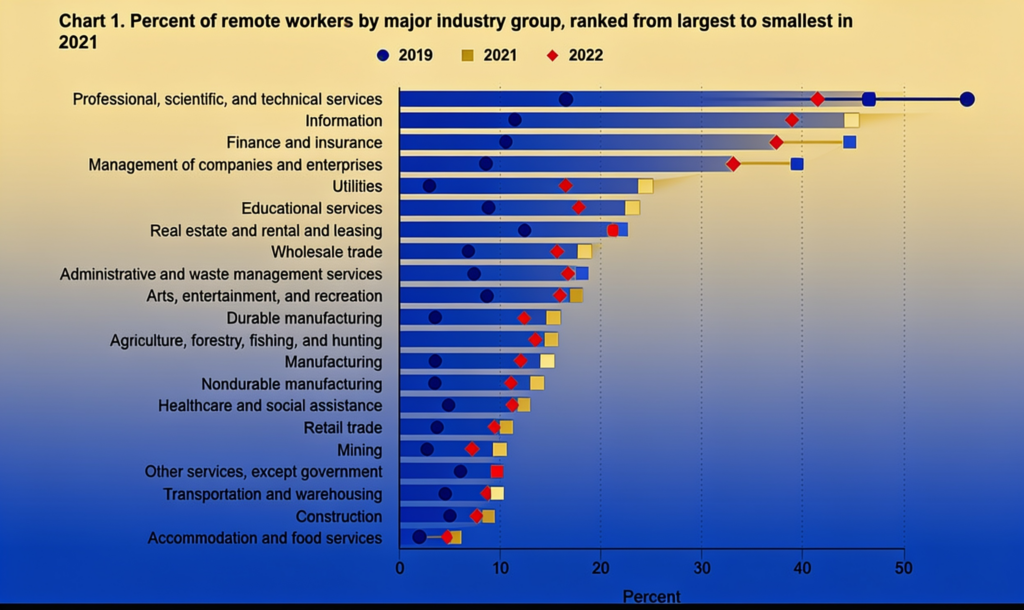
According to the U.S. Bureau of Labor Statistics, only about 6.5% of private-sector employees worked primarily from home in 2019. Still, the pandemic triggered a dramatic increase in remote work adoption across industries.
Recent workforce data also shows that over 35.5 million people in the United States teleworked in 2024, representing about 22.9% of the workforce.
Globally, remote work adoption has also grown rapidly. Some studies estimate that over 32 million Americans work remotely today, while remote workers worldwide now represent a significant share of the modern workforce.
This transformation has encouraged companies to adopt remote staffing services and remote team solutions to build global teams, access specialized talent, and scale operations efficiently.
HOW REMOTE STAFFING WORKS
Building Teams Without Geographic Limits
Find Talent
Access professionals beyond your local market.
Hire Remotely
Select candidates based on skills, not location.
Collaborate Online
Use modern tools to work together seamlessly.
Scale Faster
Grow teams efficiently with reduced overhead.
Why You Should Consider Remote Staff
Hiring remote employees has evolved from being a temporary solution to becoming a strategic hiring model for businesses across industries.
One of the most compelling reasons companies adopt remote staffing is access to a larger global talent pool. Instead of being limited to candidates within commuting distance of an office, organizations can recruit professionals from different cities or even different countries. This dramatically increases the chances of finding highly skilled individuals for specialized roles.
Remote staffing also provides cost efficiency for businesses.
Studies suggest that companies can save around $11,000 per employee per year when employees work remotely part-time or full-time, primarily due to reduced office space, utilities, infrastructure, and operational overhead.
Additionally, remote work can improve employee productivity.
Research shows that remote employees can be up to 13% more productive than office workers, partly due to fewer workplace distractions and more flexible working environments.
Another advantage is improved employee retention.
Surveys indicate that 62% of remote workers remain with the same employer for over two years, compared with only 41% of onsite workers, demonstrating stronger retention in remote roles.
For companies struggling with talent shortages or high local hiring costs, remote staffing solutions provide a practical alternative by enabling businesses to build teams without geographic constraints.
What Types of Skills Are Hired Through Remote Staffing
Remote staffing has evolved far beyond basic data entry or administrative work. Today, companies are building entire departments with remote professionals, ranging from technical experts and marketers to finance and legal specialists.
The growth of cloud technology, collaboration platforms, and global digital infrastructure has made it possible for many knowledge-based roles to operate effectively outside a physical office. In fact, technology, marketing, finance, and administrative roles are among the most commonly advertised remote positions globally.
Below are some of the most in-demand skills companies hire through remote staffing services today, along with why they are particularly suited for remote work.
MOST HIRED REMOTE ROLES
Popular Skill Categories Companies Hire For
Admin / Virtual Assistants (Up to ~90% Remote)
Administrative and virtual assistant roles are among the most widely outsourced remote positions globally. These professionals provide operational support to businesses without needing to be physically present.
Typical responsibilities include:
- Email and calendar management
- Scheduling meetings and appointments
- Data entry and document organization
- Customer communication and follow-ups
- Travel planning and expense management
The reason this role works so well remotely is that most administrative work is digital and task-based, meaning it can be performed from anywhere using collaboration tools like Slack, Google Workspace, or Microsoft Teams.
The global virtual assistant industry has grown rapidly as small and mid-sized companies increasingly outsource operational tasks to remote professionals. Many founders and executives now rely on virtual assistants to free up 10–20 hours per week of their time by delegating routine tasks.
Research also indicates that a large share of virtual assistants operate remotely, either as freelancers or through agencies, demonstrating how strongly this role aligns with remote staffing models.
For many businesses, hiring a remote administrative professional through a remote staffing agency is often the first step toward building a distributed team.
Bookkeepers and Finance Professionals (~40–45% Remote)
Financial roles have also become highly compatible with remote work thanks to cloud-based accounting platforms and secure financial systems.
- Remote bookkeepers typically handle:
- Accounts payable and receivable
- Financial reconciliation
- Payroll processing
- Financial reporting
- Tax preparation support
Accounting has become one of the most commonly posted remote job categories globally, highlighting the strong demand for remote finance professionals.
One reason finance roles adapt well to remote staffing is the rise of software like QuickBooks, Xero, NetSuite, and cloud-based ERP platforms, which allow accountants to manage financial data securely from any location.
Small businesses and startups particularly benefit from remote bookkeeping because it allows them to access experienced finance professionals without hiring full-time in-house staff, reducing payroll and overhead costs.
As a result, many companies now rely on remote staffing solutions to build distributed finance teams capable of managing global operations.
IT and Software Developers (~40–60% Remote)
Technology roles remain the most remote-friendly jobs in the world.
The software development industry was already experimenting with distributed teams long before the pandemic. Today, remote work has become a core hiring strategy for tech companies.
Studies show that over 60% of software developer roles are now remote or remote-capable, making it one of the most remote-compatible professions globally.
Similarly, the technology sector continues to lead remote work adoption, with over 67% of tech workers able to perform their jobs remotely.
Companies hire remote developers for roles such as:
- Frontend and backend developers
- Full-stack engineers
- Mobile app developers
- DevOps engineers
- Cloud architects
- AI and machine learning engineers
The reason these roles adapt so well to remote staffing is that software development workflows already rely on collaboration tools such as GitHub, Jira, Slack, and cloud deployment platforms.
Remote developers also enable companies to access global engineering talent, which is particularly valuable in industries experiencing talent shortages.
For many organizations, hiring developers through a remote staffing company allows them to scale engineering teams quickly without competing in expensive local talent markets.
Paralegals and Legal Support (~30–35% Remote)
Legal services have increasingly adopted remote staffing models, particularly for support roles such as paralegals and legal researchers.
Remote paralegals typically assist law firms with:
- Legal research
- Document preparation
- Case management
- Contract review
- Regulatory compliance
Modern legal practices rely heavily on digital case management systems, document automation tools, and secure online databases, making it possible for legal professionals to work remotely.
Many law firms now outsource legal support tasks to remote professionals, allowing attorneys to focus on client strategy and litigation while reducing operational costs.
Because of this shift, legal support roles are steadily becoming a key segment of remote staffing services.
Marketing Professionals (~30–35% Remote)
Marketing has become one of the fastest-growing categories for remote staffing.
Since most marketing activities occur online, companies can easily hire remote professionals to manage campaigns and digital channels.
Common remote marketing roles include:
- SEO specialists
- Content writers and editors
- Social media managers
- PPC and paid advertising specialists
- Marketing automation specialists
- Graphic designers
Digital marketing in particular has seen massive remote adoption because campaigns are managed through online tools like Google Ads, HubSpot, SEMrush, Meta Ads Manager, and marketing automation platforms.
Companies often prefer remote marketing teams because they can hire niche specialists from around the world rather than relying on generalists in a local office.
For example, a company might hire:
- An SEO expert from India
- A paid ads specialist from LATAM
- A content strategist from the United States
This distributed approach allows businesses to build highly specialized marketing teams through remote team solutions.
HR and Recruitment Professionals (~25–30% Remote)
Human resources and recruitment roles have also transitioned effectively into remote work.
Recruiters and HR specialists often work remotely to handle:
- Talent sourcing
- Resume screening
- Interview coordination
- Candidate assessment
- Employee onboarding
The widespread adoption of Applicant Tracking Systems (ATS), video interviewing tools, and digital HR platforms has made remote recruitment highly efficient.
In fact, recruiting roles frequently appear in remote job postings because hiring processes can now be conducted entirely online.
Remote recruiters allow companies to scale hiring quickly while accessing global talent pools.
Many organizations now partner with a remote staffing agency to build recruitment teams that can support hiring across multiple countries and time zones.
Emerging Remote Skill Categories
While the roles above dominate remote staffing today, several high-growth skill categories are rapidly emerging.
These include:
- Data science and analytics
- UX/UI design
- Product management
- Customer success management
- Logistics coordinator
- CAD Designer
- Solidworks specialist
- AI tool specialist
- HUB SPOT SPECIALIST
These roles rely heavily on digital collaboration tools, analytics platforms, and virtual communication, making them highly compatible with remote work.
As global companies continue to adopt distributed work models, these skills will play an increasingly important role in remote workforce strategies.
What Are Various Models of Remote Staffing
Organizations typically hire remote professionals through three main models.
HIRING OPTIONS
Three Ways To Build A Remote Team
Job Boards
Full control but requires sourcing,
screening, onboarding and management.
Freelance Platforms
Good for projects, but often lacks
long-term consistency and retention.
Remote Staffing Agency
Faster hiring, pre-vetted talent,
compliance support and easier scaling.
Hiring Through Job Portals
Companies can advertise remote job openings on job boards such as LinkedIn, Indeed, or niche industry platforms. In this model, the company manages the entire recruitment process, including sourcing candidates, conducting interviews, and handling payroll.
While this approach provides full control, it can also be time-consuming and resource intensive.
Hiring Through Freelance Platforms
Freelance marketplaces like Upwork or Freelancer allow businesses to hire independent contractors for specific tasks or projects.
This model works well for short-term or project-based work, but it may not always provide long-term stability or consistent team collaboration.
Hiring Through a Remote Staffing Agency
A remote staffing agency simplifies the hiring process by sourcing, screening, and onboarding qualified candidates.
The agency typically handles payroll, benefits, compliance, and HR administration. Businesses simply pay the agency while focusing on managing the employee’s work and performance.
For many organizations, this model offers the fastest and most efficient way to build remote teams.
Various Locations to Find Remote Resources
Remote staffing allows companies to recruit professionals from different parts of the world based on skill availability and cost efficiency.
United States and Canada
These countries are commonly used for leadership roles, specialized professionals, and business-critical positions.
LATAM
Countries like Brazil, Mexico, Peru, and Colombia have become popular for virtual assistants, marketing assistants, and customer support roles, especially for companies operating in North American time zones.
Eastern Europe
Eastern Europe—including countries like Poland, Ukraine, and Romania—is well known for its strong engineering and software development talent.
India
India remains one of the largest global hubs for software developers, and Accounting/finance professionals due to its large technology workforce.
Philippines
The Philippines is widely recognized for customer support, bookkeeping, digital marketing, and call center professionals, particularly for English-speaking markets.
Why Hiring Through a Remote Staffing Agency Is Best
Many businesses prefer working with a remote staffing agency because it simplifies recruitment and workforce management.
Faster Hiring Process
Remote staffing agencies maintain databases of pre-screened candidates. This allows companies to fill positions quickly without conducting lengthy hiring campaigns.
Offload HR and Legal Compliance
Hiring employees across different countries can involve complex employment laws, payroll taxes, and compliance requirements.
A remote staffing company manages these legal responsibilities, ensuring businesses remain compliant with local regulations.
Easy Replacement
If an employee leaves or does not meet expectations, staffing agencies can quickly provide replacement candidates, minimizing operational disruption.
Flexibility
Remote staffing services often provide flexible hiring models such as:
- Contract workers
- Part-time professionals
- Temporary employees
- Contract-to-hire options
This flexibility allows businesses to scale teams up or down depending on project requirements.
How Simpalm Staffing Can Help
Many businesses assume remote staffing agencies only provide administrative or entry-level workers. However, modern staffing providers now offer access to a wide range of skilled professionals.
Simpalm Staffing focuses on helping companies build reliable remote teams by providing professionals in areas such as:
- Administrative support
- Marketing and digital growth
- Accounting
- Finance
- IT development and technical roles
- Operations and business support
- Paralegals
By offering structured remote staffing solutions, Simpalm Staffing enables companies to scale their teams efficiently while avoiding the complexity of recruitment, payroll management, and compliance.
Final Thoughts
Remote staffing has fundamentally transformed how organizations build teams and operate globally. Companies that adopt remote team solutions can access broader talent pools, reduce costs, and build flexible workforces capable of adapting to changing market demands.
Simpalm Staffing helps companies build distributed teams by providing skilled professionals while managing HR processes, payroll, and compliance requirements.
If your organization is looking to expand its workforce through remote talent, partnering with a trusted remote staffing agency like Simpalm Staffing can help you build a reliable remote team quickly and efficiently.
FAQ
1. How long does it take to hire through a remote staffing agency?
Most remote staffing agencies can provide qualified candidates within 1–3 weeks, depending on the complexity of the role and required skills.
2. Are remote staffing agencies suitable for long-term hires or just temporary roles?
Remote staffing agencies support both long-term employment and short-term contracts, allowing businesses to scale teams based on project needs.
3. What types of roles can a remote staffing agency help fill?
Remote staffing agencies can help fill roles in administration, marketing, IT development, finance, HR, customer support, and operations
Also Read: Maximize Profits, Minimize Burdens: The Smart Shift to Virtual Assistant Companies
Ready to Build Your Remote Dream Team?
Simpalm Staffing matches US companies with top LATAM professionals.
Book a Free Discovery Call →