
One in five Dentists short on front office staff
Not enough administrative staff, first quarter of 2026.
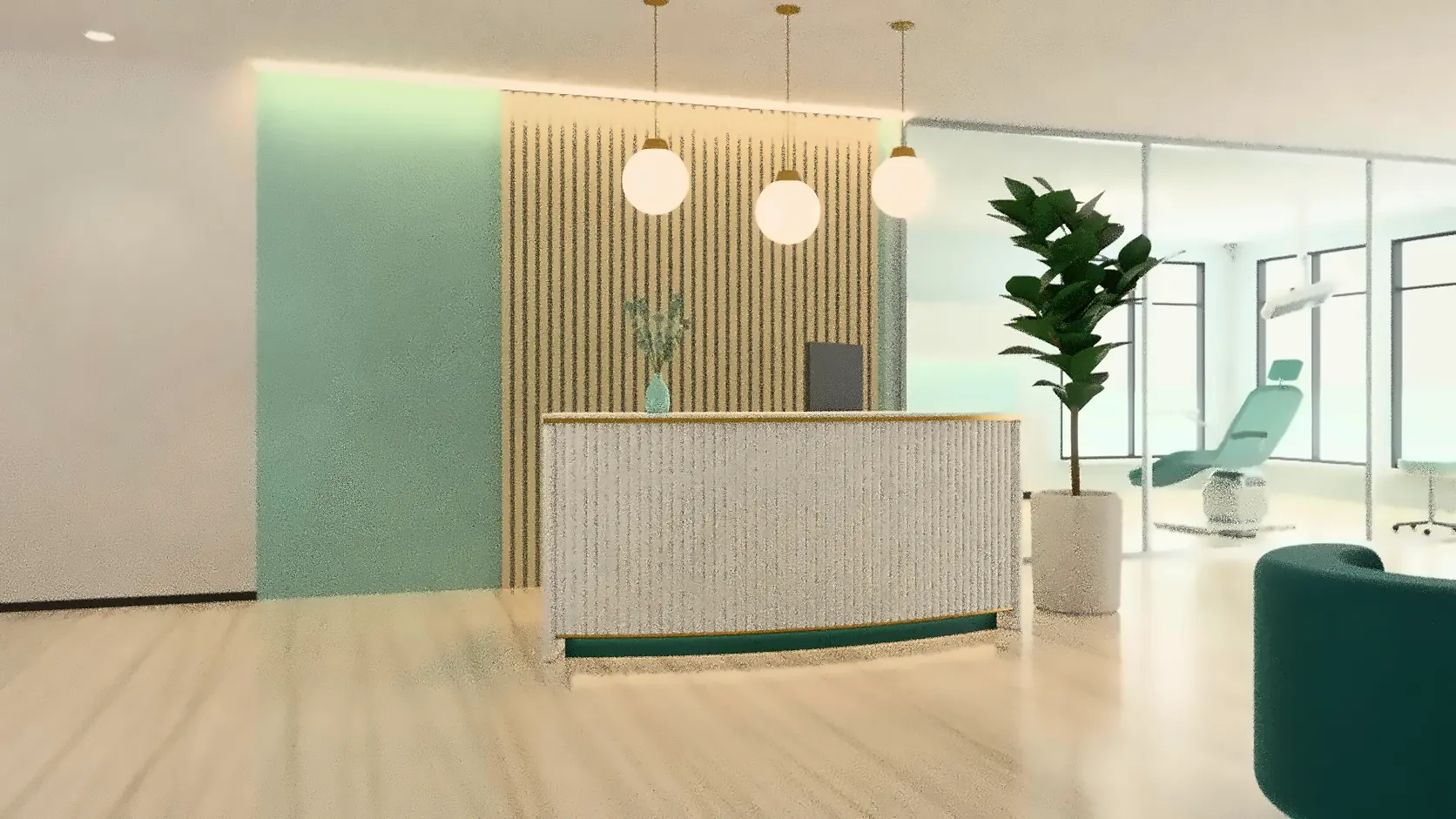
Patient care coordinators from Latin America for U.S. dental practices. Real people who return your missed calls, work your hygiene recall list, and follow up on treatment plans that never got booked.
Every dental practice has a front desk, operatories, and a recall list. What most don’t have is a follow-up desk: one person who owns the patient between visits, from the missed call to the treatment plan to the next cleaning. Without that person, patients slip away quietly, and nobody notices until the chair is empty.
Checking patients in and out, collecting payments, answering questions. The phone rings while they’re with someone.
Your dentist and hygienists treat and decide. Nobody in here has time for callbacks.
Callbacks, recall, and unbooked treatment, owned by one person.
Hygiene visits stay on the calendar when someone calls the patients who are due.
Your dentist and hygienists lead all clinical care. Sources: Patient Prism Dental Patient Access Report (vendor platform data: more than 11.5 million calls to 8,280 locations, 2025); Planet DDS benchmarks (2025, practice-analytics data weighted toward DSOs and multi-location groups). The practice drawn above is an illustration.
Your front desk is with the patients in the office. Flip a card to see who picks it up. Illustrative scenarios, not client quotes.
More than 205,000 dentists practice in the U.S., most of them in a single location, and one in three private-practice dentists says they could see more patients. The patients are out there. What’s missing is the person who reaches them.
ADA Health Policy Institute, poll of 786 private-practice dentists, fourth quarter of 2025, published December 2025.
Not enough administrative staff, first quarter of 2026.
2025. In 2024, nearly 3 in 4 practiced in a single location.
National dental expenditure, 2024.
In the past 12 months, 2025.
Sources: ADA Health Policy Institute, Economic Outlook and Emerging Issues in Dentistry, Q4 2025 (busyness poll of private-practice dentists, published December 2025) and State of the U.S. Dental Economy, Q1 2026 (one-fifth of dentists without enough administrative staff); ADA Health Policy Institute, dentist workforce (205,088 dentists in 2025; 34% solo and 39% in single-location group practices in 2024) and national dental expenditures (2024); CDC National Center for Health Statistics, National Health Interview Survey (66.4% of adults had a dental exam or cleaning in the past 12 months, 2025).
At the average practice, almost half of active patients have nothing on the books. The top 10% keep three in four booked. Your coordinator works the list of patients with no next visit, books them, and confirms the day before, so each one has an owner.
of every 100 active patients have no next visit on the books at the average practice.
Dental Intelligence benchmarks, 2025 data from practices on its analytics platform, published 2026: an average of 54% of active patients had a future appointment, 75% at the top 10% (so 46 and 25 of every 100 have nothing booked). Half of new patients left their first visit without a hygiene appointment booked. A practice-analytics benchmark, not a promise. See the benchmarks.
Illustrative calendar: eight sample patients, not real data.
Every step between visits has a person on it: one coordinator who knows each patient by name. Turn the ring.
His text lands in one queue, not a personal phone, and goes to the top of your coordinator’s morning list.
One person who owns the patient between visits: returns calls, books new patients, verifies insurance, confirms appointments, follows up on treatment plans, and works the hygiene recall list. You choose the mix.
Reconciles insurance and patient payments, deposits, and vendor bills, and pulls the monthly numbers. All reviewed and approved by you. Learn about our bookkeepers.
For example, 9 a.m. to 1 p.m., your time.
For example, 9 a.m. to 5 p.m., your time.
Weekend hours are optional. Without them, weekend messages go to the top of Monday’s callback list. Ask us about Saturday hours.
A hiring consultant, not a script. If we’re not the right fit, we say so.
A Ducknowl assessment, scored against the work your role needs.
Someone who has done this exact work, one-on-one.
Each with a price attached. You decide. None right? We go again, free.
One invoice, after the work is done. We handle payroll. Not working in the first 30 days? We find the right person.

Size is the wrong question. Six signals that it’s time to hire, from an overflowing inbox to follow-ups that go cold.
Read the article →
Own logins, least access, and a clean exit. How to let a remote coordinator into your practice software without losing control of it.
Read the article →
A practical map of what to hand off first, and what to keep. Useful before you decide between part time and full time.
Read the article →A dental patient care coordinator is the person who owns the patient between visits. They return calls and texts, book new patients, verify insurance before appointments, confirm the schedule, follow up on treatment plans that never got scheduled, and work the hygiene recall list. Simpalm Staffing places remote coordinators from Latin America who work your U.S. business hours inside your own practice software.
For many owners, yes. A single location rarely has anyone to spare for missed calls and the overdue list, because the front desk is busy with the patients in the office. A part-time coordinator, four hours a day, who returns missed calls and works the recall list is a simple way to start.
No. Your front desk stays with the patients in the office: check-in, check-out, payments, and the conversations that happen face to face. Your coordinator takes the work between visits that the front desk rarely has time for.
Start part time, four hours a day. That covers callbacks, confirmations, the overdue hygiene list, and treatment plan follow-up. Move to full time, eight hours a day, when the volume says so. It’s the same person, so there’s no new hire.
Most clients have their Simpalm Staffing coordinator working about two weeks after the first call. Software access and your scripts are set up in that window.
Start with what slips first: returning missed calls and working the overdue hygiene list. Add insurance verification, confirmations, and treatment plan follow-up as trust builds.
Ask us about evening or weekend hours. Without them, after-hours calls and texts go to the top of your coordinator’s list, and a person calls back at the start of the next shift.
In Patient Prism’s analysis of more than 11.5 million calls to 8,280 dental locations in 2025, 31 of every 100 calls ended in a hang-up before reaching the front desk, and the average location called back only 38% of the callers who didn’t book. A coordinator works that callback list every day, starting first thing in the morning.
A real person, during your coordinator’s hours. Calls and texts that arrive after hours go to the top of the list and are returned at the start of the next shift. You set the response target with us.
We match candidates to the practice software you run, and you see each finalist’s experience with it before you decide. Whoever you pick works with their own login, never a shared one.
Yes. Eligibility and benefits are checked before the appointment, on the payer’s portal or by phone, and recorded in your software the way your office does it. The CAQH Index 2024 puts a manual dental eligibility and benefits check at 12 minutes on average (2023 data), time your front desk gets back. Anything unusual goes to your office manager. Your coordinator can explain the payment options your office offers; treatment estimates and financial agreements are approved by your office.
Every week, from the top of your overdue list: a reminder on your schedule, then a personal call when a text goes unanswered, and the visit is booked while the patient is on the phone. For scale: at the average practice, 46 of every 100 active patients have no next visit booked (Dental Intelligence, 2025 data).
Yes. Your coordinator calls patients whose recommended treatment never made it onto the calendar, answers scheduling and insurance questions the way your office answers them, explains the payment options your office offers, and books the visit. Treatment estimates and financial agreements are approved by your office, and questions about whether the treatment is needed always go to your dentist.
No. Your coordinator never gives clinical advice, diagnoses, or makes treatment decisions. Anything clinical, like pain after a procedure, a medication question, or whether treatment can wait, goes straight to your dentist or clinical team.
The emergency protocol you set comes first: the call goes to your on-call dentist or clinical team right away, the patient is offered the emergency time your office has approved, and the coordinator never assesses symptoms on their own.
Yes. Tomorrow’s schedule gets confirmed, a conflict becomes a reschedule instead of a no-show, and same-day openings go to the patients on your ASAP list.
Yes. Patients past the recall window you set go on their own list, and each one gets a personal welcome-back call in your practice’s voice, before they forget you.
Many of our coordinators speak English and Spanish. If Spanish matters for your patients, tell us, and we will only introduce candidates whose Spanish we have tested.
That’s your choice. They can introduce themselves as part of your front office, using your practice’s name, your scripts, and your phone line.
Because a text is easy to ignore and a person is not. Reminders still go out on your schedule. When a text goes unanswered, a person calls, answers the question that was holding the patient back, and books the visit.
HIPAA compliance depends on your practice and how access is set up, not on a staffing agreement alone. When your practice needs one, a business associate agreement (BAA) is signed before any work begins. HIPAA’s Security Rule (45 CFR 164.312(a)(2)(i)) requires a unique user identification for each person, so your coordinator gets their own login, never a shared one, with only the access the work requires, and never uses personal phones or WhatsApp.
With the right safeguards, it can. HIPAA does not prohibit virtual assistants who work outside the U.S., as the California Dental Association noted in 2023, but it puts the duty to protect patient information on the practice and its business associates. That is why named logins and access limited to the work come first, along with a business associate agreement (BAA), signed when your practice needs one.
No. The work stays inside your systems: your practice software, your phone line, and your inbox.
Because your patients call during your business day, and coordinators in Latin America work that day with you. Many speak English and Spanish, and every candidate is assessed on real coordinator tasks before you meet them.
Each candidate completes a Ducknowl assessment scored against real coordinator tasks, then a one-on-one interview with someone who has done this work. You meet two or three finalists and choose.
It depends on hours and experience, and every candidate Simpalm Staffing introduces comes with a price attached before you decide. Many clients start part time, four hours a day. You pay one invoice, after the month’s work is done. See our pricing page for more detail.
A simple first step. Your team pulls three counts from your own software for one week: missed calls, overdue hygiene patients, and treatment plans that never got booked. You share the totals, never patient names. If there’s nothing there, we’ll tell you that too.
You’re covered by Simpalm Staffing’s 30-day fit guarantee. If your coordinator isn’t the right match for your patients and your team, we’ll find someone who is.
Give us one week of totals: missed calls, overdue hygiene patients, treatment plans that never got booked. Your team pulls the counts, and no patient names leave your office. If there’s nothing there, we’ll tell you.
Totals only. No patient names leave your office.
Simpalm Staffing provides staffing. We do not provide dental or medical care, clinical advice, insurance advice, or legal advice, and our professionals do not diagnose or make clinical decisions. They work under your direction and review, within the access you grant. You remain responsible for your patients’ care, your privacy and HIPAA obligations, insurance estimates, and your marketing practices. Patient names, owner scenarios, calendars, and conversations on this page are illustrative. Dentrix, Eaglesoft, and Open Dental are trademarks of their respective owners. Simpalm Staffing is not affiliated with or endorsed by them.